If you would like to print this newsletter, right click to open a menu and choose "Select All." Then click print, then choose the Selection option. This will print everything that is highlighted. If you have trouble printing the newsletter as stated above, you can copy and paste it into a new Word document, and there you can change font size and other elements.
NEW PRINT JOURNAL: We have started our new subscription-based print journal in January that is mailed out to homes and offices 6 times a year. You may wish to receive that in addition to this free e-newsletter. You can sign up any time during the year for the print journal.You can also buy individual or past issues here. Our next issue goes out May 1st.
Note: Because we are a research ministry, we do post news articles from various secular and Christian sources along with our own in-house articles if we believe our readers can benefit from the information. We also post video clips from YouTube at times. Also please note, any advertising on YouTube videos is not in any way connected to Lighthouse Trails and is beyond our control, but we make every effort to use only video clips that have no obscene or vulgar content including in advertising.
On Homosexual Priests, Pope Francis Asks, "Who Am I to Judge?"
By Rachel Donadio New York Times
ROME — For generations, homosexuality has largely been a taboo topic for the Vatican, ignored altogether or treated as “an intrinsic moral evil,” in the words of the previous pope.
In that context, brief remarks by Pope Francis suggesting that he would not judge priests for their sexual orientation, made aboard the papal airplane on the way back from his first foreign trip, to Brazil, resonated through the church. Never veering from church doctrine opposing homosexuality, Francis did strike a more compassionate tone than that of his predecessors, some of whom had largely avoided even saying the more colloquial “gay.”
“If someone is gay and he searches for the Lord and has good will, who am I to judge?” Francis told reporters, speaking in Italian but using the English word “gay.”
Francis’s words could not have been more different from those of Benedict XVI, who in 2005 wrote that homosexuality was “a strong tendency ordered toward an intrinsic moral evil,” and an “objective disorder.” The church document said men with “deep-seated homosexual tendencies” should not become priests. Click here to continue reading.
A Testament of Devotion Says God is in All But Christian Leaders Quote the Author
Thomas Kelly was born in 1893 to Quaker parents. He died 48 years later. But his book A Testament of Devotion lives on, and Kelly is frequently quoted by Christian authors. What did Kelly believe in, and what is it in his book that has attracted many who promote contemplative spirituality?
As we have often said, the premise of contemplative spirituality is that all paths lead to God and that God (or Divinity) is within every human being. This, of course, completely negates the gospel message of Jesus Christ and the belief that man is utterly sinful and can only be saved through faith in Christ. All paths will not lead to God, and there is no divinity within man unless that Divinity is the person of Jesus Christ who lives in the heart of the born-again soul.
Thomas Kelly begins his Testament of Devotion with the following: “Deep within us all there is an amazing inner sanctuary of the soul, a holy place, A Divine Center, a speaking Voice, to which we may continuously return.” He calls this the “Light Within” and says it “is the beginning of true life…. the Slumbering Christ, stirring to be awakened … And He is within us all.”
Thomas Kelly says there is more than one level of our mental life, a “profounder level” with a “gentle receptiveness to divine breathings,” and says that in this “energizing Center, we are all made one.” Kelly asks how we can life the life of prayer without ceasing, and as Rick Warren suggests in his book Purpose Driven Life, there are habits we can practice that will help us do that. Both Kelly and Warren refer to Brother Lawrence as one who can give us guidance in this area of unceasing prayer. And yet, according to Lawrence’s book, The Practice of the Presence of God, Lawrence “danced violently like a mad man” when he went into the meditative state of prayer (see A Time of Departing). Kelly says, “Mental habits of inward orientation must be established.” It is interesting to note that neither Jesus nor the Apostles gave such advice and certainly did not dance violently like mad men.
A Testament of Devotion is not a book that should be quoted favorably by Christians. Doing so can lead readers towards a spirituality that is contrary to biblical Christianity and that ultimately rejects the gospel. Kelly does not beat around the bush about his beliefs. On the first page of the book, he comes right to the point … God is in all. So anyone reading that book and then quoting favorably from it may indeed have strong affinities towards contemplative and New Age spirituality, and when Richard Foster wrote the foreword for a 1996 Harper Collins edition of A Testament of Devotion, perhaps this is his way of saying he agrees with such persuasions. Either way, if you are reading one of your favorite Christian authors and you come across a quote by Thomas Kelly, you might want to let that author know of your concerns.
Letter to the Editor from Australia: I Never Thought Contemplative Would Enter My Own Church
To Lighthouse Trails:
I first read Ray Yungen’s book A Time of Departing about 8 years ago and was deeply impacted by it, but I remember thinking at the time that although it was really important to be informed about this heresy, it would never surface in our fellowship. Well three months ago it got its foot in the door through sermons based on and the promotion of Peter Scazzero’s book Emotionally Healthy Spirituality. I took my concerns to the leadership but was told by a very angry pastor that I was spiritually immature and not hearing from God. The elders, although very calm and courteous were also very confused. I am now with a small Bible believing fellowship that preaches through the Word verse by verse.
Thank you so much for your excellent resource-rich website and also please thank Ray Yungen for me.
Lighthouse Trails is a Christian publishing company and research project ministry. We work with a group of Christian journalists and authors, all who understand the times in which we live from a biblical perspective. While we hope you will buy and read the books we have published, watch the DVDs we have produced, and support our ministry, we also provide extensive free research, documentation, and news on our Research site, blog, e-newsletter, and now our subscription based print journal. We pray that the books as well as the online research will be a blessing to the body of Christ and a witness to those who have not yet accepted Jesus Christ as their Savior and Lord.
In January of 2013, we began publishing Print Booklet Tracts. Click the banner below to see what we have so far. More will be added regularly. These are specifically designed to give out to people.
More Evidence and a Final Plea as Assemblies of God Conference with Ruth Haley Barton Begins August 5th
On August 5th-9th, the Assemblies of God will be holding their 2013 General Council conference titled Believe. Lighthouse Trails has written a number of times about the upcoming conference since April of this year. At the end of this report, we have listed the links to those past reports. Basically, our concern has focused on the fact that contemplative pioneer Ruth Haley Barton is one of the speakers at this year’s AOG event. We have given ample evidence to show why there is cause for concern, and we have explained the serious implications of the Barton invitation. Today, we are issuing one final plea to AOG leadership regarding this matter. The information in today’s report is vital.
Before we begin, no one should think that this is the first time AOG leadership has promoted a contemplative/emerging author. This has been an ongoing problem for sometime (although the Barton invitation is probably the most pronounced). For example, there are several instances within the Assemblies of God seminary that show an affinity toward contemplative spirituality and the emerging church. And the Gospel Publishing House (the publishing arm of AOG) website sells a number of books from authors in the emerging/contemplative camp.
Incidentally, on the Network for Women in Ministry website (that’s the AOG women’s group responsible for inviting Ruth Barton to this year’s General Council conference), a ”Suggested List for Further Reading” offers Celebration of Discipline by Richard Foster (where he says “we should all, without shame, enroll in the school of contemplative prayer”), Prayer: Finding the Heart’s True Home by Foster (his primer on contemplative prayer), a book by Henri Nouwen, and a book called The Contemporaries Meet the Classics on Prayer, which includes writings by many contemplative proponents: Nouwen, Foster, Marjorie Thompson, Brother Lawrence, Calvin Miller, Dallas Willard, Mother Teresa, Evelyn Underhill, and Thomas Merton.
Now, onto the information we are compelled to share in this report. It may seem trivial to some at first, but if you read through this report, we think you will see the significance.
In Ruth Haley Barton’s book Invitation to Solitude and Silence (the book where Barton acknowledges Thomas Keating’s influence in her life), Barton quotes the late Catholic priest William Shannon from his book Silence on Fire (the biography of Thomas Merton). Shannon states:
Wordless prayer … is humble, simple, lowly, prayer in which we experience our total dependence on God and our awareness that we are in God. Wordless prayer is not an effort to “get anywhere, ” for we are already there (in God’s presence). It is just that we are not sufficiently conscious of our being there.1 (emphasis added)
Shannon’s comment here is the typical statement by mystics of all religious backgrounds, i.e., that God is already inside each one of us (all mankind), and we just need to become aware of it. It is a panentheistic view. We can illustrate this further when Shannon says:
The contemplative experience is neither a union of separate identities nor a fusion of them; on the contrary, separate identities disappear in the All Who is God.2
Shannon, founder of the International Thomas Merton Society, did not believe in the biblical view of God as we will show below. When he speaks of “separate identities disappear[ing],” he means that there is only one identity - God and that God and man are mutually the same. This is classic Buddhism or Hinduism. In A Time of Departing, Ray Yungen addresses Shannon’s panentheistic beliefs:
[In William Shannon's book, Silence on Fire], he relates the account of a theological discussion he once had with an atheist groom for whom he was performing a wedding ceremony. He told the skeptical young man:
“You will never find God by looking outside yourself. You will only find God within. It will only be when you have come to experience God in your own heart and let God into the corridors of your heart (or rather found God there) that you will be able to ‘know’ that there is indeed a God and that you are not separate from God.”
This advice is no different from what any New Age teacher would impart to someone who held an atheistic point of view. You want God? Meditate! God is just waiting for you to open up. Based on Shannon’s own mystical beliefs, he knew this was the right approach. He alluded to this by explaining that the young man would find enlightenment if he would look in the right place or use the right method.3
In Shannon’s book, Seeds of Peace, he reiterates this same view:
This forgetfulness, of our oneness with God, is not just a personal experience, it is the corporate experience of humanity. Indeed, this is one way to understanding original sin. We are in God, but we don’t seem to know it. We are in paradise, but we don’t realize it.4 (emphasis added)
You will find this mindset in contemplative teachers across the board. This being in God has nothing to do with a personal relationship with Jesus Christ through faith. Shannon isn’t saying this to born-again Christians. This union with God is a blanket declaration for all of mankind, with or without a Savior. We are all in God.
MSGR. William Shannon – 1917-2012
Shannon contrasts the spirituality of devotion (placating God with good works) with “contemplative spirituality,” the latter where God is identified as “the ground of all being”5 and the core of everything there is (man is naturally connected with God). Contemplative mystics, such as Shannon and Merton, teach that all you have to do to find this union with God is use the mystical technology which connects you with your “true self” (i.e, your own divinity). Bernard of Clairvaux, contemplative mystic from ages past, said that God is “the stone in the stones and tree in the trees.”6 In other words, God exists in everything and is the essence of what we see – there is no distinction between God and His creation. We know from Scripture, however, that this untrue. Isaiah 42:8 declares, ”I am the LORD: that is my name: and my glory will I not give to another.” Yungen points out, “Creation can reflect God’s glory (Isaiah 6:3), but it can never possess God’s glory. For that to happen would mean God was indeed giving His glory to another.”7 Paul, the apostle, solidifies the distinction between God and creation when he warns of those who worship the creature (creation) rather than the Creator (Romans 1:25).
What this boils down to is this: In the writings of these mystics – the ones Ruth Haley Barton admires, quotes, and gleans from – there is nothing promoting the Gospel or the message of the Cross. Rather, a cosmic “Christ,” which revolves around a panentheistic, interspiritual outlook, is uplifted and glorified. There is nothing truly Christian about the teachings of Merton, Keating, Shannon, and Tilden Edwards. And let us make something clear – these mystics don’t hide their propensities. It isn’t in some secret code or subtle message. On the contrary, they are forthright and bold about their stance.
If these mystics whom Barton admires are so open about their views, how is it she is drawn to them so consistently in her own spiritual walk? No doubt, she has read their books, so she must know what they really stand for. A lover of God’s Word would not be drawn to those who reject the message of the Cross. That’s right, reject. In Silence on Fire, the very book from which Barton quotes William Shannon, Shannon says:
This [the traditional biblical view] is a typical patriarchal notion of God. He is the God of Noah who sees people deep in sin, repents that He made them and resolves to destroy them. He is the God of the desert who sends snakes to bite His people because they murmured against Him. He is the God of David who practically decimates a people. . . . He is the God who exacts the last drop of blood from His Son, so that His just anger, evoked by sin, may be appeased. This God whose moods alternate between graciousness and fierce anger. This God does not exist.8 (emphasis added)
You see, overall, the contemplatives reject the notion that God sent His Son to a violent death as a penalty for OUR sins. While they may say that Jesus was a good example of servanthood, they reject His death as an atonement for others. This anti-atonement view is pervasive among the mystics.9 That is because you cannot have it both ways: you cannot have a Gospel of salvation through the death of a Savior for man’s sins and also say that God exists in all things and that man is divine. It just won’t work. The mystics and New Agers know that – but how ironic – the Christian leaders don’t!
Listen to another man who trained Barton – Tilden Edwards, co-founder of the Shalem Prayer Institute:
It is such an innocent, intuitively discerning mind that helps make the Eastern guru and the Desert Abba “master” [the intuitively discerning mind is the contemplative state]. Where intimate Source [inner divinity] radiates among non-Christians then surely we must be dealing with the “other sheep” (Matthew 10:16) manifesting the cosmic Christ.10
In other words, in this contemplative state, the East and the West meet. The word “cosmic” often carries with it a silly childish connotation (remember, baby boomers who grew up with Buck Rogers and his cosmic ray gun). But here the word cosmic or cosmos carries a deeper meaning where the “cosmic Christ” is not an individual – it is a consciousness, and it can only be grasped in the meditative state.
We’ll leave you with this question: Is it not utterly amazing (and almost unbelievable) that Ruth Haley Barton has gained access to the hierarchy of the Assemblies of God denomination, where the General Superintendent, Dr. George Wood, insinuated that those under him should not consider the evidence that Lighthouse Trails provided. But, just because someone tells others not to listen doesn’t change the facts. Either they are true, or they aren’t true; and ignoring the facts doesn’t make them go away.
[B]e not conformed to this world: but be ye transformed by the renewing of your mind, that ye may prove what is that good, and acceptable, and perfect, will of God. (Romans 12:2 – emphasis added)
Notes:
1. Ruth Haley Barton, Invitation to Solitude and Silence, p 39.
2. William Shannon, quoted in The Message of Thomas Merton, p. 200.
3. Ray Yungen, A Time of Departing, pp. 31-32, quoting William Shannon in Silence on Fire, p. 99.
4. William Shannon, Seeds of Peace, p. 66.
5. Thomas Merton, The Hidden Ground of Love, p. 570.
6. Joseph Chu-Cong, The Contemplative Experience, Joseph Chu-Cong, p. 3.
7. Yungen, A Time of Departing, p. 31.
8. (Shannon, Silence on Fire, pp. 109-110.
9. See Roger Oakland’s chapter, “Slaughterhouse Religion” in Faith Undone. You can read the PDF for free here.
Can Christians Be Spiritually Deceived, and How Can They Avoid it?
By Roger Oakland Understand the Times, International
If our battle is not against flesh and blood, then why is it that when we are in conflicts here on this earth that flesh and blood always show up? What are the reasons for this? Is it possible for believers to be agents for darkness and not even know it? Is it possible for entire organizations to be misled because they have not kept their focus on Jesus Christ and His Word? How is it possible for believers and even leaders to believe they are following Jesus, when instead they are following man? These and other questions intrigue me. Only the Bible has the answers. And though, I am sure, not all of these questions will be answered fully in this life, we can gain the vital insights that we need from the Word of God. The book of Revelation, which has often been ignored for a lack of understanding, will prove to be more and more insightful in these last days before Jesus returns.
For example, the letters to the seven churches have much to say about churches going apostate. In Revelation, it foretells how the whole world will be wrapped up in vast delusion and apostasy. We are seeing that happening right now. And just as God used His humble servant, John, to warn the churches to get their houses in order, God is sounding out a warning again to the churches that will listen. Repentance has always been the trademark of those who are His. They know that God will come back for a church “not having spot or wrinkle, or any such thing; but that it should be holy and without blemish” (Ephesians 5:27). It has been said that the church has a lot of washing and ironing to do before Jesus returns if we are to be without “spot or wrinkle.”
But just as the churches in Revelation were given opportunity to repent, so is that invitation going out today. The Bible warns:
[F]or the time is come that judgment must begin at the house of God: and if it first begin at us, what shall the end be of them that obey not the gospel of God? (1 Peter 4:17)
This is a very sober warning, and as we hear the voices of many scoffers throughout the land, we can hear the thunderings of judgment, in the distance, approaching closer by the day.
One thing the Bible is very clear on, we cannot serve man and God at the same time.
No man can serve two masters: for either he will hate the one, and love the other; or else he will hold to the one, and despise the other. Ye cannot serve God and mammon. (Matthew 6:24)
Most believers start out right and have a desire to follow Jesus Christ, not man. I know this was my case, and it is also the heartfelt desire of many others whom I have known. When we become born-again followers of Jesus and servants enlisted in the army of God, the Bible says God has “delivered us from the power of darkness, and hath translated us into the kingdom of his dear Son” (Colossians 1:13). We have crossed the bridge from one side to another. But we must remember that Satan knows it, and so do his agents described in the Bible as demons, principalities, and powers.
While Satan has lost his grip on those written in the Book of Life, meaning he will not be spending eternity with us, his focus now changes to making us ineffective in the service of God. As the wiles of the Devil are subtle, he is able to cleverly change or manipulate our focus and alter God-given goals. In some cases, the Devil is able to turn someone around one hundred and eighty degrees and put him back on the same team he was originally part of before his conversion to Jesus Christ. “How is that possible?” you ask. This is hard to fathom, but I have seen it with my own eyes. “Perhaps that person was never saved in the first place,” you say. Maybe so. Only God knows the heart of each person, and the Bible says He knows who are His, and they hear His voice (John 10:4).
For anyone who might argue that spiritual deception cannot happen to the Christian, just consider how often the New Testament warns against spiritual deception. Listen to just a few of these verses:
And Jesus answered and said unto them, Take heed that no man deceive you. (Matthew 24:4, and see Mark 13:5)
For many shall come in my name, saying, I am Christ; and shall deceive many. (Matthew 24:5)
And he said, Take heed that ye be not deceived. (Luke 21:8)
Let no man deceive you by any means: for that day shall not come, except there come a falling away first, and that man of sin be revealed, the son of perdition (2 Thessalonians 2:3)
Let no man deceive himself. If any man among you seemeth to be wise in this world, let him become a fool, that he may be wise. (1 Corinthians 3:18)
Also see Romans 7:11 and 16:18, 1 Corinthians 6:1, 1 Corinthians 15:33, Galatians 6:7, Ephesians 5:6, 2 Timothy 3:13, Titus 1:10. And there are more. I list these to demonstrate that spiritual deception is real and is frequently discussed in the Bible. No doubt, it is a recurring theme from Genesis where Eve was deceived by the serpent all the way to Revelation, where it says the day will come when Satan will deceive the whole world (Revelation 12:9).
I have heard many pastors say, “I don’t need to talk about spiritual deception as long as I teach the Bible verse by verse.” And I have heard many others say, “I don’t want to be negative; I just want to focus on what I am for, not what I am against.” But I say to these pastors, to ignore the topic of spiritual deception is to ignore a biblical principle. How can one teach the Bible verse by verse, yet never have anything to say about spiritual deception? And when reading these passages (of which there are many), would it not be negligent to overlook their relevancy to what is happening in the church today? Going through the Bible verse by verse is good, but it takes more than just reading what happened in the past; through the Holy Spirit, the Bible is to instruct, exhort, teach, and warn us about the present and the future. To ignore the Bible’s warnings, to dismiss them, to minimize their importance for today is just downright irresponsible and so dangerous for the sheep.
It is highly likely that we will become deceived if we are prone to following men rather than Jesus Christ and His Word. Many new believers have been led astray early in their walk by following a man. This man may appear godly and may even seem to be a good teacher of the Word. Behind the pulpit, he may even be anointed because he teaches the Bible. The Bible is God’s Word, and God anoints His Word.
However, there is more. Not all men who seem to be anointed behind the pulpit are anointed behind their desk or in their business dealings. Some may abuse the Word of God by their style of leadership. Some may even use the Scriptures to manipulate people in order to exhibit power. Such mind control is extremely damaging.
Such leadership by a pastor would be confusing, at best, for a young Christian growing up in this environment. That young believer would wonder how a man of God can also be a carnal man all at the same time. Is that even possible? This would certainly be a paradox. By the way, history shows that there have been many men looked up to as great leaders who led multitudes astray.
Another thing new Christians (and old ones too) run into is being taught to unquestionably follow the teachings of their pastors and elders. They are told they lack the spiritual maturity to decipher spiritual matters on their own, and that by obeying their leaders, they are obeying God. Put another way, they are told that their leaders serve as their spiritual covering, and therefore, they are always safe and obedient to God when they follow the teachings of their leaders. One such leader told a friend of mine, “You aren’t qualified to spot spiritual deception.”
When a group or organization gets to this point, things can get very dangerous. In essence, a cult -like environment has formed, and those in it do not know it. It is possible that the leaders may not even know it. Soon the “cult” members are quoting the leaders and their sayings. They now wait for the leaders to make announcements and edicts. If the leaders say nothing about apostasy, then it must be OK. If they say something about apostasy, then they say, ay.
I have seen this over and over where believers no longer think for themselves nor check out the Word of God for themselves. They have enveloped themselves with a false sense of security by relying solely on their pastors and elders. This is not the way Christianity should function according to the Bible. Jesus said to go out and make disciples, not children. The followers have followed leaders who have been like pied-pipers heading to the jagged and perilous cliffs. By following men, their methods, and their movements, danger awaits, and eventually those movements will implode.
With many of these movements today, the leaders have issues that have not been dealt with. When this happens to a movement, the movement takes on the look of the leadership model, and the unresolved mistakes and sins are handed down.
I have been surprised at how many people I have known over the years who would tell me, “I’ll never go to another conference by that group again—they are so compromised.” But then I would learn that he or she would attend again. It just seemed so hard to break away from “going with the flow.”
Satan does not care how one is deceived, just as long as deception occurs. If he can get your attention off the Word of God and back to the world, then he has been successful. There have been many who have fallen away like this. The lures of the world are very enticing for the flesh. Why not, the mind ponders, indulge in the things of the world? It could be through what we take in our mouths that we indulge. It could be even more sensual and sexual. It could be intellectual, as Satan wants us to believe that the Bible is not the infallible Word of God. If he can put seeds of doubt into our minds, those seeds can fester and grow like a body overtaken with disease.
One of the greatest attacks in history against Bible-believing Christianity has been underway for over five hundred years. Most Christians, including most pastors and most denominations, are not aware this is even happening. The Pope and, in particularly, the Jesuit Order author a vigorous effort to bring Christian believers into the Roman Catholic Church, whatever means it takes. The objective? That the world will worship the Pope in the manner they worship God. The plan is to make God’s Word into the word of man and the Pope’s word into the word of God.
Throughout history, there have been many who have run into the wrath of the Pope’s men. This agenda is still very active in the world today and is impacting many churches and organizations, through avenues such as the emerging church, and the Purpose Driven movement.
Many Christians don’t see themselves in a battle—perhaps they feel secure and safe in their large lively churches week after week. They may take their Bibles to church and even give regular offerings. But if their loyalty is toward a man, a movement, or a denomination, God is not impressed. God is looking for hearts “after His own heart” (1 Samuel 13:14), wholly devoted and loyal to Jesus Christ and the Word of God.
The night is far spent, the day is at hand: let us therefore cast off the works of darkness, and let us put on the armour of light. (Romans 13:12)
(An excerpt from Let There Be Light by Roger Oakland, chapter 22)
Did God Put “Eternity In Their Hearts” or “The World In Their Hearts”?
By Sandy Simpson Deception in the Church Ministries
In the introduction to Mike Oppenheimer’s and my book Idolatry In Their Hearts, I exposed the fact that Don Richardson pulled the phrase “Eternity In Their Hearts” to use as his book title from its context in Ecc. 3:11. He did this to support his thesis, which actually contradicts the second part of that verse, where it states that man cannot fathom what God has done. Richardson, rather, sets forth what has become the foundation for the false teachings of the WCGIP [World Christian Gathering on Indigenous People], YWAM, a number of Bible translation societies, and the Emerging Church … the proposition that men from Gentile cultures have always been seeking God and that Gentile cultures were already worshipping the true God before missionaries came with the Gospel.
But as I further investigated this verse, I found that Richardson even ignored the true meaning of the FIRST half of the verse in favor of a few translations that use the phrase “eternity in their hearts.” Richardson opted to use that phrase, or the equivalent, which is only used in five major translations: the NIV, GWV, Lesser, NKJV and RSV.
Ecc. 3:11 He has made everything beautiful in its time. He has also set eternity in the hearts of men; yet they cannot fathom what God has done from beginning to end. (NIV)
Ecc. 3:11 It is beautiful how God has done everything at the right time. He has put a sense of eternity in people’s minds. Yet, mortals still can’t grasp what God is doing from the beginning to the end of time. (GWV)
Ecc. 3:11 Every thing hath he made beautiful in its proper time: he hath also placed the eternity in their heart, without a man’s being able to find out the work that God hath made from the beginning to the end. (Lesser)
Ecc. 3:11 He has made everything beautiful in its time. Also He has put eternity in their hearts, except that no one can find out the work that God does from beginning to end. (NKJV)
Ecc. 3:11 He has made everything beautiful in its time; also he has put eternity into man’s mind, yet so that he cannot find out what God has done from the beginning to the end. (RSV)
The Hebrew word translated above as “eternity” is actually owlam, according to Strong’s, meaning ever, everlasting, old, perpetual, evermore, never, time, ancient, world, always, alway, long. Eternity is not the most used meaning of owlam in the Bible. Usually when the Old Testament means “eternity,” it uses the Hebrew word ad. To be fair, the OT uses the world tebel most often for “world.” But when you look at the majority of the translations of Ecc. 3:11 [including the KJV], you will not find “eternity in their hearts” but rather “the world in their heart.” I believe that “the world in their heart” is more consistent with the last half of the verse. God gave man a worldly mindset, if you will, so that he could not really know God without the intervention of His Word and the Holy Spirit through being born again. Click here to continue reading.
Sad News About Charles Stanley’s In Touch Magazine
Lighthouse Trails has watched in dismay over the past few years as Charles Stanley’s In Touch magazine has made the decision to promote contemplative/emergent names. When our editors picked up a copy of the August 2013 issue and saw a feature article written by Jonathan Wilson-Hartgrove, we decided to call In Touch Ministries to find out who was responsible for the content in the magazine. Sadly, the response we received from the editorial department at In Touch left us with a sinking feeling that the evangelical church has been seduced and there was no turning back.
We’ll talk about the phone call in a minute but first a look at Jonathan Wilson-Hartgrove.
In June of 2011, Lighthouse Trails free lance writer Mike Stanwood wrote “Contemplative Spirituality Lands on Charles Stanley’s In Touch Magazine . . . Again.” In this article, it was revealed that in the January 2011 In Touch magazine issue, Jonathan Wilson-Hartgrove was featured in an article written by In Touch Managing Editor Cameron Lawrence. That article, titled “The Craft of Stability: Discovering the Ancient Art of Staying Put,” highlighted the “ intentional Christian community” at the Rutba House (Wilson-Hartgrove’s home) and their “daily prayer routine.” The In Touch article stated that Rutba House is an evangelical community rooted in the Protestant tradition and that Wilson-Hartgrove is an ordained Baptist minister, yet it also reported that Rutba’s community principles are borrowed from Benedictine monks and that all of their efforts are based on St. Benedict’s “rule of life.”
In Stanwood’s article, he points out that Wilson-Hartgrove is part of the “New Monasticism” movement within the emerging church. To help you understand just how serious this situation is with Charles Stanley and his ministry, read this following section of Stanwood’s article:
Wilson-Hartgrove is most recently known for co-authoring Common Prayer: A Liturgy for Ordinary Radicals with new monastic activist Shane Claiborne. Other books he has authored may also fall into the emerging/contemplative category. For example, one such book called New Monasticism: What It Has to Say to Today’s Church(1) has been endorsed by mystic proponents Brian McLaren, Phyllis Tickle, Tony Campolo, and Catholic priest and centering prayer advocate Richard Rohr. The mystics resonate with the “new monasticism” – this is plain to see.
On the surface, the new monasticism may look OK with its many good works of helping the poor and the needy. But the underlying belief system does not line up with biblical doctrine; rather it is about establishing an all-inclusive kingdom of God on earth now where individual salvation is replaced with a community salvation for the whole world. Atonement has less emphasis on Jesus Christ as the only atonement for man’s sins and instead becomes an at-one-ment where all of creation is “being” saved by coming together as one (and yes, seeing the divinity of man). This is the kind of “atonement” that McLaren, Tickle, and Rohr would resonate with.
It is important to see that they don’t just resonate with the good works coming out of the new monasticism; born-again Christians have been performing good works by helping the poor and needy for centuries and continue to do so. While this new monasticism supposedly distinguishes itself by its good works, in reality it is mysticism and the foundational beliefs of mysticism (i.e., panentheism, kingdom now, etc) that distinguish it. And it is that element that Tickle, McLaren, and Rohr embrace.
Additional resources on Wilson-Hartgrove’s website include a DVD called Discovering Christian Classics: 5 Sessions in the Ancient Faith of Our Future, a five-week study with contemplative advocate Lauren F. Winner (Girl Meets God) for high school or adult “formation.” A description of this DVD states:
“You will discover the meaning of conversion and prayer from the Desert Fathers and Mothers; how to love from the sermons of St. John Chrysostom; St. Benedict’s Rule of Life and how it became one of the foundations of Western Christian spirituality; how to have an intimate relationship with God according to The Cloud of Unknowing; and what it means to ‘pick up your cross” in the Imitation of Christ by Thomas A. Kempis.’”
In a Beliefnet interview one year ago, Wilson-Hartgrove shared how “we need the wisdom of those who’ve gone before us.” This wisdom he is referring to comes not from the Bible, but from the contemplative “Benedictines (who) taught us to start the day with common prayer.”1
After seeing what is at the core of Wilson-Hartgrove’s spiritual wisdom, it is not surprising to learn that he recently made an appearance at the [very emergent] Wild Goose Festival .2 According to an article in the Christian Post, the Wild Goose Festival was a “four-day revival camp in North Carolina featuring music, yoga, liberal talk and embracing of gays and lesbians.”
The fact is, anyone who is drawn to Pierre Teilhard de Chardin, as Wilson-Hartgrove is, has got to be following a different spirit and another gospel or at the very least greatly deceived. Chardin, who is attributed to the term “cosmic Christ,” did not hide the fact in his writings that he believed, not in the Christ of the Bible, but a christ consciousness in every human being.
While we do not challenge Wilson-Hartgrove’s sincerity or concern for the poor and needy, we must challenge his consistent promotion of contemplative mystics and emergent leaders, and he certainly does not seem like a proper fit with In Touch Ministries, that is unless In Touch is going emerging. The reason we say this about Wilson-Hartgrove’s sincerity has to do with the phone call we had with two editors of the editorial staff of In Touch magazine on July 24, 2013. One of the editors we spoke with was Cameron Lawrence, the Editor in Chief (and also the one who wrote the 2011 In Touch article featuring Wilson-Hartgrove). Lawrence asked us if we had ever spoken with Wilson-Hartgrove personally, suggesting that he was a sincere man who lived out the Gospel by helping the needy. We answered him by stating that the issue at hand was not a private matter but rather a public issue because Wilson-Hartgrove is a public figure (books, conferences, articles, etc). We said that it did not matter what he might say in a private conversation, but it did matter what he was teaching others. And it mattered greatly that In Touch was promoting him.
When we spoke with Cameron Lawrence, we told him we wanted to know who was responsible for putting the article by Wilson-Hartgrove in the magazine to which he told us “the entire editorial staff” made the decision. We asked him if he would be interested in seeing some of our documentation to which he answered, “I have been on the Lighthouse Trails website, and I didn’t find it helpful.” The other editor we spoke with, who wished to remain anonymous, said it sounded like we were on a “witch hunt” to which we responded, “No, we are part of a Gospel-protection effort.”
At times like this, it is difficult not to become discouraged by the lack of interest in Christian intelligentsia and leadership regarding the contemplative/emerging issue. What more can we say to show them what seems so obvious to ourselves and many other Bible believing contenders of the faith? A number of years ago, when the Be Still DVD (a contemplative infomercial) came out and we saw Charles Stanley’s name in the credits as someone who supported the DVD, we contacted his ministry and spoke with a personal assistant. He accepted our offer for a free copy of A Time of Departing but said that Charles Stanley would be too busy to read it.
If the mystics whom Jonathan Wilson-Hartgrove gravitates to are right, then Jesus’ words that He is the only Way to the Father are wrong. You can’t have it both ways. The opposite view – the contemplative – is that God is in all things, including all people. This is what all mystics believe, across the board. And if that were true, then the need for a Savior would vanish, and there wouldn’t be any need for ”one way” to God because man is already indwelled with God and a part of God.
Jesus saith unto him, I am the way, the truth, and the life: no man cometh unto the Father, but by me. John 14:6
From the Frying Pan into the Fire: Women of Faith Partners with New Age Advocate Roma Downey
Lighthouse Trails first addressed concerns about the Women of Faith conferences in 2006. In an article, we stated:
Women of Faith is a Christian franchise that has held conferences for over 3 million women since its inception in 1996. In 2000, Christian publisher Thomas Nelson bought the Women of Faith franchise and has a strong influence in the organization. Nearly all of the regular Women of Faith speakers are Thomas Nelson authors, and Thomas Nelson books are sold at the Women of Faith conferences, thus women attending the conferences will get a hearty dose of Thomas Nelson.
In light of books published by Thomas Nelson that have contemplative slants, women attending these conferences should use discernment and wisdom. Below is a list of some Thomas Nelson books and authors that have New Age and/or contemplative content. Incidentally, nearly all of these books below are sold through the Women of Faith online bookstore, including Yoga for Christians and The Secret Message of Jesus:
Yoga for Christians by Susan Bordenkircher The Secret Message of Jesus by Brian McLaren Cure for the Common Life by Max Lucado Speaking My Mind by Tony Campolo Celebration of Discipline (Spanish) by Richard Foster The Sacred Romance by John Eldredge Turn My Mourning into Dancing by Henri Nouwen How to Make the Rest of Your Life the Best of Your Life by Mark Victor Hansen Seeing What is Sacred by Ken Gire So You Want to Be Like Christ (Workbook) by Chuck Swindoll
In 2007, Lighthouse Trails posted an article titled “10, 000 Expected to Attend Women of Faith Conference.” In that article, we stated that the “women who attend Women of Faith conferences will be exposed to mystical spirituality, and because they trust Women of Faith, they will be caught unaware and put in harm’s way.”
When a well known organization like Women of Faith is the reason women are exposed to false teaching, whether through exposure to The Message paraphrase, or to the apostate rebellion of Brian McLaren, this should not be accepted with a yawn and a shrug. . . . Is Women of Faith on its way to purveying a generic spirituality?
We fear we must say yes to John Lanagan’s question. Women of Faith is going from the frying pan into the fire. In a June 21st Christian Post article, “Mark Burnett, Roma Downey Partner With Women of Faith, ‘Believe God Can Do Anything’ Tour,” it explains how Women of Faith “has partnered with ‘The Bible’ producers Mark Burnett and Roma Downey to incorporate parts of the highly successful History Channel program into its ‘life-changing’ tour. That probably sounds UN-alarming to most people. After all, what could be wrong with a program called The Bible? And the series (now seen by over 100 million people), The Bible, is being promoted widely by many Christian organizations and ministries with a broad marketing target.
It was concerning enough knowing these past several years that Women of Faith introduced their women to Brian McLaren and other emergent-type names. But Roma Downey falls as much in the New Spirituality camp as McLaren, if not more. First of all, Roma promotes the Roman Catholic church. In an article we posted earlier this year,Rick Warren Endorses 2013 Book, “Catholics Come Home” – Calls Catholic Evangelization “Critically Important,” we quoted Downey as saying this about the Catholics Come Home book: “Catholics Come Home inspires each of us to share God’s love with others, in order to help change the world for the better, for eternity!” And, in a book titled Practical Praying: Using the Rosary to Enhance Your Life, there is a companion “Meditation” CD by Roma Downey that comes with the book.
But Roma Downey isn’t just a Catholic promoter. She is a New Age/New Spirituality promoter. Within the pages of a book titled Loyalty to Your Soul by Ron and Mary Hulnick (published in 2010 by the New Age publisher, Hay House), Downey endorses the book saying:
As a USM [ University of Santa Monica - a New Age metaphysical school] graduate, I know firsthand the value I received from participating with Ron and Mary in the Master’s degree Program in Spiritual Psychology. I am so grateful to have Loyalty to Your Soul to sweetly remind me of all I have learned. Let’s just say that I went from playing an angel on TV to living more of an angelic life every day. The teachings in this beautiful book have sent me on a journey to the very center of my own being where, wrapped in the safe wings of Love, I feel as though I have come home.
Downey’s endorsement in the Hulnick’s book is nestled in with full-blown New Agers like Barbara Marx Hubbard, Joan Borysenko, and Gay Hendricks (The Corporate Mystic). By the way, Neale Donald Walsch, the New Ager who said that Hitler did the Jews a favor by killing them,1 wrote the foreword to Loyalty to Your Soul.
Clearly, Downey read this book and resonates deeply with it to say what she did about it. To get an idea of this “journey” that Downey is on, listen to a few quotes from Loyalty to Your Soul:
Center your awareness in your heart and consciously look for the Loving Essence in the person in your presence. By doing so, you’re signifying your respect for the Soul before you . . . Maintain awareness that you’re in conversation with another Divine Being who is engaged in having a human experience. (p. 209)
We ask for the presence, protection, guidance, and Love of the Divine Beings who work with each of us. (from the “Invocation” – emphasis added
“When people speak of spirituality, they simply mean awareness of the sacred reality of the Divine Essence within and beyond all creation.” (p. 8, quoting favorably a New Age “spiritual teacher”)
For the awakening person, there is a growing yearning for time in the silence. There is a sense of needing time and space for contemplation, meditation, walking in nature, and just plain being alone. Attuning to the inner channel of Divine Love is supported by quiet moments. (p. 27)
You begin to recognize others as Divine Beings, and the situations and circumstances of your life as learning devices. (p. 31)
Those familiar with New Age teachings will recognize such statements as being the core essence of the occult (that man is divine). Loyalty to Your Soul is a contemporary version of A Course in Miracles (the New Age book Warren B. Smith talks about in his biography, The Light That Was Dark).
We find it disconcerting to know that someone with Downey’s spiritual propensities, who attended a New Age university, helped to create a program on God’s Word.
So, the question we have is this: Now that Women of Faith has “partnered” with Roma Downey, will the millions of women who attend Women of Faith conferences be led down the same path Downey has found herself on? Perhaps we should ask Beth Moore, Priscilla Shirer, Lisa Harper, and Sheila Walsch the answer to that question – they will be the speakers at the Women of Faith “Unwrap the Bible” conference in 2014 (see video below where Downey promotes this conference). But then, you might get a biased answer – Moore, Shirer, Harper, and Walsch are all proponents of contemplative spirituality, and those who understand the dynamics of contemplative prayer know that it is a comfortable companion to the ”theology” behind A Course in Miracles.
Evangelical and Protestant Christianity are becoming synonymous with contemplative spirituality. In other words, where you find evangelical and Protestant Christianity, you will increasingly find contemplative spirituality (i.e., Spiritual Formation). And in this paradigm shift, we can see that Alice Bailey’s prediction that the church will be the avenue through which the “Aquarian Age” will enter the world, preparing for that one whom the Bible warns will deceive the whole world.
Related Video: (If you cannot see this video below, click here.)
A Scrapbook From Kenya - Bryce Homes Doing Well - Thank you UTT and LT readers
The latest from the Bryce Homes in Kenya.
(photo: two of Widow Benta's children)
If you cannot see the scrapbook below, click here.
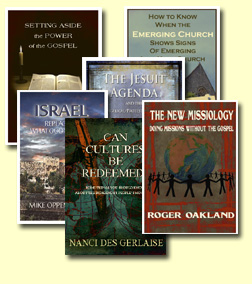
If you would like to donate, remember, all donations go through Understand the Times. For more information, slideshows, etc, visit our missions site at www.missionsfortruth.com or go to http://www.understandthetimes.org/missionkenya.shtml. We hope you will join this missions project that does not compromise the message of the Cross. If you haven't read Roger Oakland's article/booklet, The New Missiology: Doing Missions Without the Gospel, we hope you will. Then you will understand our hearts for the work we are doing in Kenya.
Letter to the Editor: Please Add Ozark Christian College to the Contemplative College List
I appreciate your website and your willingness to enlighten people of the errors of darkness that are all around us, especially in “the church”. One of the areas that is so disappointing but necessary to realize is the infiltration of supposed “bible or Christian” by false teaching.
My husband and I came from the background of the restoration movement Christian Churches but began seeing dangers in them back in the 1990s. We even worked at Ozark Christian College before that time and have since seen them go headlong into apostasy, the Purpose Driven mania and the contemplative direction. Several of the sister schools are already on your warning list: Lincoln Christian University, Cincinnati, Milligan, to name a few. But Ozark has never made your list. So I am including some of their courses/books to show that they need to be added to the list.
Spiritual Formation Retreat is required for all degrees. This is listed under Doctrine. Also many books from their text listing include authors such as: Ortberg, Willard, Timothy Keller, Strobel, Chan, Serendipity Bible, Manning, Peterson, Hybels, Blackaby, etc. Many of the textbooks used are written by the current and past faculty. Sad to say it is extremely difficult to find a church/college that actually just teaches pure scripture. They all seem to have an agenda contrary to the Scriptures. Anyway, thought you should know that there is another college that needs to be on your list.
Their website is : www.OCC.edu that you can check what I’ve included here.
Thank you again for standing for the Truth, no matter what.
____________
Sample:
DO 332 Spiritual Formation Retreat (this is required for all degrees)
(DO 333 Wilderness Challenge may be substituted)
An advanced Christian Life Retreat where students evaluate their spiritual health, while being exposed and participating in the fundamental forms of prayer, meditation, contemplation and other spiritual disciplines rooted in the Christian tradition. The course will have biblical, historical, theological, pastoral components and exercises. Prerequisite: must have completed 60 hours. (2 hours)
Books required: Devotional Classic – Foster; Emotionally Healthy Spirituality – Scazzero; Invitation to a Journey – Mulholland (spiritual formation)
DO 333 Wilderness Challenge
Students will be challenged to grow spiritually, mentally and physically in the areas of self-awareness, confidence and team unity through the rigors of a ten-day wilderness experience and a weekend seminar. (2 hours) Book required: Man’s Search for Meaning – Frankl
DO 420 Doctrine of Word and Table
A study of the Eucharist as an act of worship presented as the sacrifice of expiation, thanksgiving, and communion in celebration of Christ’s death, resurrection and coming glory. This course will also explore how the content, form, and styles of worship are enlivened through intentional worship design and the expression of the arts. Class will be conducted by lecture, assigned readings, research, and discussion. Prerequisites: DO 224 Foundations for Christian Worship, HI 331 History of Christian Worship, MU 360 Strategies for Worship Leadership, MU 390 Practical Issues in Worship Ministry. (2 hours)
Lighthouse Trails Response:
After confirming the information above and doing our own research, we have determined that Ozark Christian College is indeed promoting contemplative spirituality and Spiritual Formation. Thus we have added Ozark Christian College to our Contemplative Colleges list. Below is our own added documentation. This is just a small sampling of what is there at the school:
A recommended reading list (in a Ozark newsletter) from Ozark’s president Matt Proctor includes Dallas Willard, Philip Yancey, Desert Father St. Anthony, and Richard Foster. Of Celebration of Discipline, Proctor said it “opened [his] imagination to new ways of pursuing God” (p. 4). Also in that same college newsletter, Matt Proctor has an article titled “Christ in Her Heart, a Pen in Her Hand.” The article is about Jan Johnson (a contemplative Ray Yungen addresses in A Time of Departing) who attended Ozark years ago. Proctor gives Johnson’s ”ministry” and her contemplative books a big thumbs up.
A 2012 Ozark “Tentative” textbook list includes contemplatives John Ortberg, Richard Foster, Philip Yancey, Henri Nouwen, and Buddhist sympathizer Peter Kreeft, as well as emergents Shane Claiborne and N.T. Wright, Robert Webber, and one name that stands out above the others is Marcus Borg. Borg rejects several of biblical Christianity’s main tenets including the virgin birth and Jesus being the Son of God. Please refer to this article by Roger Oakland for the evidence on Borg’s beliefs: “Marcus Borg on Atonement, the Resurrection, and the Son of God.” To see his name on the Ozark ”tentative” textbook list is troubling, to say the least.
There are several other contemplative/emerging textbooks on that 2012 list as well. We’d have to say that it is probably one of the more extensive textbook lists of mystic advocates that we have ever seen in one school. If you want a glimpse of where Christian colleges that are engaged in contemplative spirituality and Spiritual Formation are going, read these two quotes by Borg. This is what we call the “fruit” of contemplative prayer. And this is why we cannot stop warning about it.
I let go of the notion that the Bible is a divine product. I learned that it is a human cultural product, the product of two ancient communities, biblical Israel and early Christianity. As such, it contained their understandings and affirmations, not statements coming directly or somewhat directly from God…. I realized that whatever “divine revelation” and the “inspiration of the Bible” meant (if they meant anything), they did not mean that the Bible was a divine product with divine authority. . . .
Jesus almost certainly was not born of a virgin, did not think of himself as the Son of God, and did not see his purpose as dying for the sins of the world. (The God We Never Knew New York, NY: HarperCollins, First HarperCollins Paperback Edition, 1998, p. 25)
Note: While the textbook list that included Borg was a “tentative” textbook list and we don’t know for sure whether Borg’s or the other emergent’s books were actually used in 2012, the 2013 textbook list shows the same propensities including Marcus Borg’s book The Meaning of Jesus.
1560 – The Martyrdom of Nicholas Burton, an English Merchant in Spain
By John Foxe (author of Foxe’s Book of Martyrs)
Mr. Nicholas Burton, a citizen of London, was dwelling in the city of Cadiz, Spain, where he was engaged in the business of trading merchandise. On November 5, 1560, there came into his lodging a Judas, or, as they term them, a familiar of the fathers of Inquisition; asking for Nicholas Burton, he feigned that he had a letter to deliver into his own hands. This gained him access to Burton’s presence, but having no letter to deliver to him, the familiar invented another lie, and said he would like to send freight bound for London in such ships as the said Nicholas Burton might have available; if indeed there was room to be had. He said this partly to know where he loaded his goods that they might attach them, and chiefly to protract the time until the sergeant of the Inquisition might come and apprehend Nicholas Burton; which they did forthwith.
Burton perceived that they would not be able to charge him that he had written, spoken, or done anything there in that country against the ecclesiastical or temporal laws of the same realm. He boldly asked them what they had to lay to his charge that they did so arrest him, and bade them to declare the cause, and he would answer them. Notwithstanding they answered nothing, but commanded him with threatening words to hold his peace and not speak one word to them.
And so they carried him to the filthy common prison of the town of Cadiz where he remained in irons fourteen days amongst thieves. All which time he instructed the poor prisoners in the Word of God, according to the good talent which God had given him, and also in the Spanish tongue to utter the same, that in that short space he had persuaded several of the Spanish prisoners to embrace the Word of God and to reject their popish traditions.
When this became known unto the officers of the Inquisition, they conveyed him laden with irons from thence to a city called Seville, into a more cruel prison called Triana. There the fathers of the Inquisition proceeded against him secretly according to their accustomed cruel tyranny, and threatened him to never write nor speak to any of his nation: so that to this day it is unknown who was his accuser.
On the twentieth of December, they brought Nicholas Burton, with a great number of other prisoners who professed the true Christian religion, to a place where the inquisitors sat in judgment.
His tongue was forced out of his mouth with a cloven stick fastened upon it that he should not utter his conscience and faith to the people. He was set with other Englishmen and Frenchmen, as well as Spaniards, upon a scaffold over against the Inquisition, where their sentences and judgments were read and pronounced against them. And immediately after the sentences were given, they were carried from there to the place of execution outside the city, where they most cruelly burned them, for whose constant faith, God is praised.
In the flames of that fire, Nicholas had so cheerful a countenance, embracing death with all patience and gladness that the tormentors and enemies who stood by, said that the devil had his soul before he came to the fire; and therefore they said his senses of feeling were past him. To read this and other accounts of Christian martyrs, see Foxe’s Book of Martyrs. This is also available in Kindle, Nook, PDF, and e-book as are most Lighthouse Trails books.)
CAIR: Helen Thomas "Will Be Fondly Remembered by the Muslim Community"
(CNSNews.com) – The Council on American-Islamic Relations (CAIR) offered condolences on the death of Helen Thomas, saying she will be “fondly remembered by the American Muslim community.”
Thomas, who died on Saturday at the age of 92, was the first female member of the White House press corps. She covered the White House from 1960 until 2010, when she resigned after making anti-Semitic remarks. . . .
“She will be fondly remembered by the American Muslim community and by all those who value a free press and transparent governance,” they said.
Thomas was a fixture at the White House for decades, covering every president from Dwight D. Eisenhower to Barack Obama. In May 2010 a viral video cost Thomas her position when she said Israeli Jews should “get the hell out of Palestine.”
At a White House celebration for American Jewish Heritage Month, Thomas was asked by RabbiLive.com if she had any “comments on Israel.”
“Tell them to get the hell out of Palestine,” Thomas said. ”Remember, these people are occupied, and it’s their land.”
Thomas then suggested that Jewish people “go home” to “Poland, Germany,” “and America, and everywhere else.” Click here to continue reading. If you cannot see the video below, click here.
Map: Israel is in red; Muslim countries in green.
SIGN UP FOR LIGHTHOUSE TRAILS RESEARCH PRINT JOURNAL - MAILED 6X/YEAR
NOTE: This subscription-based journal can be used in addition to this free e-newsletter you are getting (the e-newsletter will continue to be sent out 2-4 times a month via e-mail at no charge). (view 1st issue of print journal) It's never too late to subscribe for the print journal - anytime is fine. You will receive the current issue, which is the July/August issue.
Note: The new subscription-based print journal can be ordered at any time during the year. Your subscription (which will entitle you to a full twelve months of journals-6 issues) will start when you subscribe. Click here to read more information or click here to sign up. Subscription rate: $12/year (6 issues) for U.S.; $24 for Canada; $36 for other international. (There is no added postage charged for the journal - the mailing costs are worked into the subscription fee.)
When you sign up, you will receive the most current issue of the journal at the time you subscribe. Click here to subscribe now. You can order past subscriptions for $2.
Order Bulk Subscriptions and Save: If you would like to order more than one subscription, the cost is $9.55 per subscription (6 issues/12 months), plus whatever it costs to ship the bulk journals to one address (minimum bulk order - 5 subscriptions). Bulk rates are just for when the entire batch is going to one address. Call 866/876-3910 or e-mail sales@lighthousetrails.com for a quote on bulk subscription shipping costs.
WEEKLY SPECIAL OFFER - 2 FREE BOOKLET TRACTS WITH EMERGING CHURCH 6 PACK
SPECIAL OFFER - This week's special offer is this: Buy the Emerging Church Booklet Tract 6 pack for $9.95 and receive two copies of our latest Booklet Tract, The Peace of God versus the P.E.A.C.E. of Man for FREE.You don't need to use a code. Just buy the Emerging Church Booklet 6 pack here, and we will include 2 copies of the Peace Booklet Tract with your order.
If you like, you can read any of the booklets in full before buying them. Just click on any of the links below.
THIS SPECIAL OFFER WILL END ON AUGUST 9TH AT MIDNIGHT.
The Booklets are made with high quality gloss paper for durability and are 5 1/2" X 8 1/2" with a full color cover. They are well written and include endnotes, and some have appendixes. They are designed to hand out to others who need to hear these important truths based on God's Word. Here are the titles of all of our Booklet Tracts:
Upcoming booklets: Teresa of Avila, the Catholic Church's New Evangelization Plan for the "Lost Brethren," Harry Potter, Dominionism, and more.
NEW BOOKLET TRACT: The Peace of God versus the P.E.A.C.E. of Man
The Peace of God versus the P.E.A.C.E. of Man written by David Dombrowski is our newest Lighthouse Trails Print Booklet Tract. The booklet tract is 10 pages long and sells for $1.50 for single copies. Quantity discounts are as much as 50% off retail. Below is the content of the booklet.To order copies of The Peace of God versus the P.E.A.C.E. of Man, click here.
The Peace of God versus the P.E.A.C.E. of Man
by David Dombrowski
The subject of peace has been thought about, written about, and passed through the lips of countless people over the centuries. Human history has been racked by violence and unrest since the fall of man, making peace an evasive commodity that has only been known for relatively short periods of time.
We wanted to take a look at peace from a biblical perspective considering that the subject is being increasingly talked about in academic, political, and especially religious circles. Rick Warren, for instance, has been trying to implement and promote his P.E.A.C.E. Plan through his three-legged stool approach of melding the world’s religious, economic, and political forces into one. As he points out, just as a stool cannot stand unless it has at least three legs, he believes that we cannot achieve world peace without the blending and unifying of these three forces. The New Age movement also has a P.E.A.C.E. plan, and although the acronym utilizes different terms, the intents and goals are similar to those of the Purpose Driven Movement.
The Bible teaches that we are to, “if it be possible, as much as lieth in you, live peaceably with all men” (Romans 12:18). Paul’s choice of words here serve as a kind of hesitation in approaching the subject of peace because he knew in his own life what an evasive commodity peace can be. Paul’s mission was to preach the Gospel, but in so doing he recounts the perils that he faced to include receiving 39 lashes five times, being beaten with rods three times, and being stoned once (2 Corinthians 11:24-25). But this was no great surprise to Paul because God had said of him, “I will shew him how great things he must suffer for my name’s sake” (Acts 9:16). When we read of the lives of the other apostles, we learn that their lives were marked by suffering and hardship too. But the Lord had also prepared them for this in saying, “If they have persecuted me, they will also persecute you” (John 15:20). Jesus even went so far as to describe to Peter what kind of death he would suffer for the sake of the Gospel (John 21:18). Is it any wonder, then, if our lives are marked by hardships and misunderstandings and hostility.
However, in recalling the lives of the apostles and those who have suffered before us, a very important lesson can be learned here. What is being taught in many of today’s “new” Christianity churches is that our task is to build God’s kingdom here on earth and that Jesus will return once we have created a form of Utopia here. Similarly, the Catholic Church believes we will create a Utopia once the whole world unites in a devotion to Mary and the Eucharist; this world-wide devotion to the Eucharist will be their version of the second coming of Christ.
But as all of these churches unite in trying to bring their version of peace on earth, they are sadly mistaken and ignorant of what is clearly presented in Scripture. This ignorance of the Scriptures is really a matter of choice than anything else. Just as Peter was not happy to hear what sort of death he would suffer, the emerging religious leaders of today do not want to believe the bleak picture the Bible portrays of the world before Jesus’ return. But while Peter accepted Jesus’ words, these new Christianity emerging leaders have bent and twisted Scripture in such a way as to support this Utopian God’s-kingdom-on-earth-now theology.
Unbeknownst to the multitudes who are following these globalistic leaders, these current efforts toward global peace are paving the way for the Antichrist whom the Bible warns will implement a peace plan in the last days. Sadly, much of the church of today, as apostate as it has become, is becoming deluded and conditioned to receive this satanic world leader in much the same way that the churches in Germany were conditioned by anti-Semitic teachings prior to Hitler’s rise to power. Our leaders of today are becoming modern-day John the Baptists for the Antichrist.
While it is true that some of Bible prophecy can be difficult to understand, just a superficial reading of Matthew 24 or Luke 21 should make it abundantly clear that Jesus will return to a world of violence and chaos, not Utopia. But, here again these Scriptures have been twisted or ignored—by choice.
As for the Book of Revelation, some current-day Bible teachers believe that the prophecies of the Book of Revelation have already happened (preterism) (as the Catholic Church teaches) or that these events can be prevented (as the New Age and emerging church teaches) in much the same way that Jonah’s warning to the Ninevites was turned around. The sad difference is that while the Ninevites responded by repentance, our world is moving further away from godliness. Furthermore, the Book of Revelation depicts events as they will actually happen—not as they might or could happen—because John saw in a vision the future as it will be.
There is, however, God’s call today for repentance. There are Christian believers who have been trying to spread abroad God’s appeal for repentance and His warnings about the apostasy that has already come upon us. They have been warning that judgment begins in the house of God and that judgment is upon us now too. As we shall see, judgment on the world has only begun and will intensify in the future like birth-pangs on a woman in labor. Paul said, “For we know that the whole creation groaneth and travaileth in pain together until now” (Romans 8:22).
It is rather uncanny how the world, in recent years, has witnessed so many natural disasters in the form of earthquakes, floods, and weather phenomena, while the mainstream news media has done so little to cover these events. In Japan, they had a triple disaster of earthquake, tsunami, and nuclear holocaust with possibly millions seriously exposed to radiation in Japan while unknown quantities of contaminated water got dumped into the ocean, and radiation permeated our atmosphere on a global scale; yet the media had little to say about this either except to almost laughingly dismiss it by saying we are getting less exposure than we get from having an X-ray in the dentist’s office. The indifference is unbelievable.
Could it be this indifference we are witnessing is part of the world-wide delusion Jesus predicted would sweep the earth in the end times? Most Americans, in particular, are living in denial—unwilling to acknowledge the storm clouds looming on our horizon. Is it because we have known little of suffering, and those living today have never witnessed our shores being invaded by war? But America will know God’s judgment, and again the reason why we cannot see it is a matter of choice rather than looking at things realistically.
Of all Americans, our Christian leaders should be seeing and hearing God’s warnings of impending judgment. But instead, they are shaking hands with the Devil and prophesying peace, purpose, and prosperity through unity and “community” to their congregations.
Sadly, our world will not know the lasting peace that our religious leaders are predicting—not until after Jesus Christ returns. Yet, God is offering peace and comfort to his own—to those who hear His Word and follow Him. But this peace is not to be found by pursuing our own dreams and goals but rather in seeking to know what God has planned for our lives. The reality is that much of the anguish we experience in life is when things don’t turn out the way we had hoped or expected. By contrast, Jesus’ apostles knew the peace of God because rather than living in the denial of the post-modern Christians of today, they abided in Christ (1 John 2:28) and fully embraced the lives that God had for them, even when they knew it could mean martyrdom.
Think again of the plight of Peter. Jesus had told him that he would suffer persecution and die a cruel death, yet we do not see Peter wringing his hands at every bend in the road wondering what horrors may await him around the next corner. Peter’s life was not one of denial or of fear, but of resolve; the same man who had denied his Lord three times made it his mission to walk with God no matter where that road took him. Consider the events of Acts chapter twelve. King Herod had just had James the brother of John killed by the sword, and when he saw that it pleased the Jews, he had Peter arrested too (Acts 12:2-3). No doubt, Herod’s intention was to have Peter executed also; and from the believers, realizing the severity of the situation, “prayer was made without ceasing” (vs. 5). Meanwhile, Peter had no expectation that an angel would deliver him that night, yet he could sleep in such a dire situation. Peter had learned to entrust his life to the Lord—combining faith and yielding to the will of God—and his heart was ready for whatever awaited him. As the chapter closes, we learn that with the turn of events, it is King Herod who dies and Peter is free.
It seems that Peter was always learning lessons in life, and here we can see that he had learned to be at peace in even the most drastic of situations, leaving the outcome in God’s hands. In his first epistle, Peter shares this perspective:
Beloved, think it not strange concerning the fiery trial which is to try you, as though some strange thing happened unto you: But rejoice, inasmuch as ye are partakers of Christ’s sufferings; that, when his glory shall be revealed, ye may be glad also with exceeding joy. . . . Wherefore let them that suffer according to the will of God commit the keeping of their souls to him in well doing, as unto a faithful Creator. (1 Peter 4:12,13,19)
Like Paul, Peter had learned to be content in every situation. It is the life available to all Christians who yield to God’s will, trusting Him to bring them through every situation. How alien to this way of thinking is the church of today where the expectation is that God will make things go our way—even to the point of achieving global peace and a Utopian society. These are things that Jesus never promised us and, in fact, warned would not happen. While Christian leaders of today are speaking of establishing God’s kingdom on Earth before Jesus returns, Jesus said, “My kingdom is not of this world” (John 18:36—emphasis added).
Should we not, as believers in Jesus Christ, be about our Father’s business? So while we should try to live at peace with all men, our objective should be to spread the Gospel to all mankind. When Jesus spoke of the kingdom of heaven, he never used illustrations that support the kingdom-now teachings of today. Rather, He spoke of hidden things and small beginnings. There was the parable of the mustard seed, which has a small and humble beginning yet grows into a tree (Matthew 13:31-32). Then there is the parable of the leaven, which a woman “hid” in three measures of meal, yet it leavened the whole lump of dough (Matthew 13:33). We used to wonder what Jesus meant by these parables, but over the last several years we have become aware that while the apostate church has been very visible and trumpeting their attempts to bring about a world-wide “reformation,” simultaneously an unseen body of believers all over the world has been returning to their first love and walking in repentance. I am sure that it is to this body of believers that Jesus refers to as the kingdom of heaven—not the boisterous liberal body who will sacrifice the Gospel in their pursuit of peace.
Peace is one of those unusual commodities (though very valuable), which cannot be achieved through direct pursuit. When nations have walked in repentance and pursued righteousness, God has blessed them with peace. But when nations have become vile and unruly and exchange a pursuit for God for a pursuit of things, the aspiration for peace remains out of reach.
The kingdom of heaven is less visible in its pursuits because its goals are different than the earthly ones of the apostate church. Our commission is to spread the Gospel, and it is to this cause that we need to be faithful. The kingdom of heaven is less visible in another way too—it is something that works in the hearts of people bringing about change through repentance and godliness. Compare this with Rick Warren’s “new reformation,” which is based, by Warren’s own admission, by deeds rather than creeds. All are invited to this reformation, regardless of what anyone believes. But Jesus put it plainly when He said that a man’s actions, be they good or evil, proceed from what is in the heart. A reformation based on action that does not deal with the heart is futile indeed. In order to change our world into a better place, hearts would need to change. The only way our nation could have a turn-around at this point would be through widespread repentance, but how can this happen when even the church is not walking in repentance today?
Righteousness exalteth a nation: but sin is a reproach to any people. Proverbs 14:34
Today, we often hear many Christian groups quoting 2 Chronicles 7:14: “If my people, which are called by my name, shall humble themselves, and pray . . . then will I hear from heaven . . . and will heal their land.” But there is a part of this Scripture that is usually ignored: “If my people, which are called by my name, shall humble themselves, and pray, and seek my face, and turn from their wicked ways; then will I hear from heaven, and will forgive their sin, and will heal their land.” All of the prayers for America by apostate leaders are in vain because these leaders (and their followers) have not even repented themselves. On the contrary, they continue to promote and exalt a kingdom-now, dominionist, mystical, experiential “gospel.” Just look how popular books like The Shack and The Purpose Driven Life have been with new ones like these on the horizon every day. These books make people feel good about themselves, but they do not bring the heart to repentance.
Unfortunately, the peace that our world desires will not be known because its pursuits are ungodly. For the true believer, however, peace is an achievable commodity. Jesus promised His disciples peace when He said, “Peace I leave with you, my peace I give unto you: not as the world giveth, give I unto you. Let not your heart be troubled, neither let it be afraid” (John 14:27—emphasis added). Notice that Jesus says two things here: First, the peace He gives is not like the peace the world gives. In other words, don’t pursue peace from the world. Secondly, Jesus speaks of the heart. Peace, for the Christian, is a matter of the heart. And, as I alluded to before, Christians with false expectations (who are living in denial) will be disappointed again and again and live lives of anguish. The Bible says that “fear hath torment” (1 John 4:18). But the disciples faced their fears; they acknowledged the fact that they would encounter persecution and hardships, then they entrusted their lives to God as unto a faithful Creator. After all, the God who made us is also able to take care of us. And He has promised to abide in us (I John 3:24) if we abide in Him.
Even though we cannot and will not know the day or the hour of Jesus’ return, Jesus did instruct us to observe the seasons. Right now, we are at that place Jeremiah speaks of where he says, “They have healed also the hurt of the daughter of my people slightly, saying, Peace, peace; when there is no peace” (Jeremiah 6:14). In a time when pastors should be leading their churches in repentance and evangelists calling our nation back to righteousness, we have peace plans underway. The future of our nation and our world is bleak, so we should not be offering false assurances that will only be dashed to the ground.
The Bible offers peace for the true believer, but it is a peace that transcends what the world has to offer. Looking to the world for peace will only lead to disappointment. The peace God gives is of the heart, and it does not depend on our circumstances. It results from looking reality in the face but then looking to God and keeping our eyes on Him—trusting Him to deliver us and keep us under the shadow of His wings.
Open ye the gates, that the righteous nation which keepeth the truth may enter in. Thou wilt keep him in perfect peace, whose mind is stayed on thee: because he trusteth in thee. Trust ye in the Lord forever: for in the Lord Jehovah is everlasting strength. (Isaiah 26:2-4)
To order copies of The Peace of God versus the P.E.A.C.E. of Man, click here.
FLAT RATE U.S. SHIPPING AND HISTORY OF LIGHTHOUSE TRAILS
FREE BIBLE VERSE TEA SAMPLES WITH EVERY ORDER! (except with media rate, journals, and some smaller orders where it might change the shipping costs) AND DON'T FORGET TO CHECK OUT ALL OUR BOOK AND DVD SETS.
A GREAT WAY TO SAVE!
As a way to say thank you to our readers and customers of our catalog and online store, we are offering, indefinitely, to our U.S.A. customers a $5 flat rate shipping on all orders (you can choose a lesser rate for smaller orders). When you get to the third step at check out, just choose the FLAT RATE shipping option. Click here to enter store.

 Thomas Kelly was born in 1893 to Quaker parents. He died 48 years later. But his book A Testament of Devotion lives on, and Kelly is frequently quoted by Christian authors. What did Kelly believe in, and what is it in his book that has attracted many who promote contemplative spirituality?
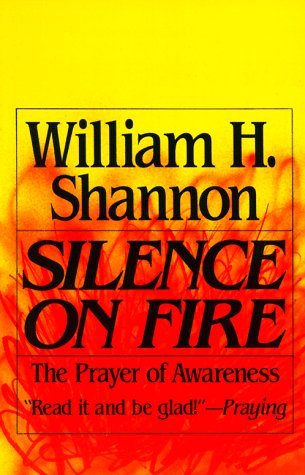 Shannon states:

 In Stanwood’s article, he points out that Wilson-Hartgrove is part of the “New Monasticism” movement within the emerging church. To help you understand just how serious this situation is with Charles Stanley and his ministry, read this following section of Stanwood’s article:
 In 2000, Christian publisher Thomas Nelson bought the Women of Faith franchise and has a strong influence in the organization. Nearly all of the regular Women of Faith speakers are Thomas Nelson authors, and Thomas Nelson books are sold at the Women of Faith conferences, thus women attending the conferences will get a hearty dose of Thomas Nelson.


 NOTE: This subscription-based journal can be used in addition to this free e-newsletter you are getting (the e-newsletter will continue to be sent out 2-4 times a month via e-mail at no charge).